
Smart Strategic Planning
See how strategic planning is evolving in organizations with AI agents.
- Prebuilt agent Ready to use, we do not start from scratch.We start from an agent prepared for this process and configure it with your rules, your systems and your way of working.
- Best practices Built in from day one.The agent's instructions incorporate the process practices we have applied when automating it in different organizations.
- Configured by experts Functional and technology consultants.Specialized consultants support the configuration, integration, testing and go-live of the agent in your operation.
- Agent platform Workforce AI.The agent runs on Workforce AI, GIITIC's own platform that centralizes security, permissions, audit, usage and administration of all your agents.
- Process experience Processes + technology + enterprise software.Behind every agent are years of experience implementing enterprise software and automating processes in companies across Latin America.
- GIITIC software ecosystem The tools the agent needs.We integrate with your current systems and, if you are missing one, the GIITIC ecosystem provides the modules the agent needs to query and act.

How it is done today, and why it is no longer enough
Strategic planning is still almost entirely manual: in a Gartner survey of about 200 strategy leaders, only 15% of strategic planning and execution activities were automated, even though they estimated 50% could be.
- Plans in spreadsheets
- Few alternatives evaluated
- Impacts not estimated
- Everything is a priority
- Plans without owners or dates
- Planning once a year
Smart Strategic Planning agent

I'm an artificial intelligence agent trained by experts, ready to use and built with best practices. I am here to propose what to do based on your company’s diagnoses: I lay out alternatives, estimate their impact, cost and risk, prioritize initiatives and build the action plan with activities, owners, deadlines and indicators. Strategic decisions are always approved by you.
Prebuilt, but adaptable to each organization.
How I work
- I understandDiagnosis and objectivesI read the diagnosis and your company’s strategic objectives, targets and constraints.
- I proposeAlternativesI lay out several possible strategies using your company’s knowledge and best practices.
- I evaluateImpact, cost and riskI estimate the effect of each alternative on your indicators, with its assumptions, costs and risks.
- I prioritizeInitiativesI rank initiatives by impact, effort, urgency and available capacity.
- I planAction planI define activities, owners, deadlines, resources and indicators for each initiative.
- I presentYour approvalI present the plan with the evidence; you decide and, once approved, I record and share it.
Results you can achieve
- of strategic planning can be automated
- 50%Strategy leaders estimate that half of strategic planning and execution can be fully or partially automated; today only 15% is.Source: Gartner, 2023
- of strategy tasks are exposed to AI
- 80%+More than 80% of strategy teams’ activities have high or medium exposure to AI automation or augmentation.Source: BCG Henderson Institute, 2026
- of strategy leaders see AI as key
- 79%They see AI, analytics and automation as critical to their success over the next two years (survey of about 200 strategy leaders).Source: Gartner, 2023
Reference values based on benchmarks and comparable scenarios. Results depend on the characteristics of each operation and are not guaranteed results.
Greater speed, higher quality, lower costs

Greater speed
Automate tasks and connect your information so your team responds sooner and your processes move forward without waiting.
- Proposes alternatives in minutes, as soon as the diagnosis arrives
- Gathers data from the areas without asking for it by email
- Delivers the action plan ready to review and approve
- Adjusts the plan when the diagnoses change, without waiting for the annual cycle

Higher quality
Standardize the work and control every step so your information is reliable and your results are consistent.
- Compares several alternatives with the same criteria
- Shows the assumptions, data and sources behind every estimate
- Aligns every initiative with the strategic objectives
- Gives every action an owner, a deadline and an indicator

Lower costs
Reduce rework, errors and manual work so your operation delivers more with the same resources.
- Focuses resources on the highest-impact initiatives
- Avoids duplicate initiatives or ones the team can’t execute
- Reduces the hours analysts and managers spend building presentations
- Lowers the cost of deciding late
Artificial intelligence in strategic planning
Before
- 8:00 a.m.8:00 a.m. · MilestoneThe diagnosis of the margin drop in the wholesale line arrives
- 8:00 a.m.8:00 a.m. · PersonThe planning analyst reads the diagnosis and lists possible actions1 h
- 9:00 a.m.9:00 a.m. · PersonAsks Sales, Logistics and Finance for cost, volume and capacity data30 min
- 9:30 a.m.9:30 a.m. · Lost timeWaits for the data from the areas22 h 30 min
- 8:00 a.m. · day 28:00 a.m. · day 2 · PersonConsolidates the data in spreadsheets and estimates the impact of three alternatives4 h
- 12:00 p.m.12:00 p.m. · PersonBuilds the presentation with the alternatives and a recommendation2 h
- 2:00 p.m.2:00 p.m. · Lost timeWaits for the management committee42 h
- 8:00 a.m. · day 48:00 a.m. · day 4 · PersonThe committee discusses the alternatives and chooses the initiatives2 h
- 10:00 a.m.10:00 a.m. · PersonThe analyst writes the plan with activities, owners, deadlines and indicators3 h
- 1:00 p.m.1:00 p.m. · Lost timeWaits for the general manager’s sign-off19 h
- 8:00 a.m. · day 58:00 a.m. · day 5 · MilestoneAction plan approved
Now
- 8:00 a.m.8:00 a.m. · MilestoneThe diagnosis of the margin drop in the wholesale line arrives
- 8:00 a.m.8:00 a.m. · AgentReads the diagnosis, objectives and targets, and checks costs, volumes and capacity in the systems5 min
- 8:05 a.m.8:05 a.m. · AgentProposes four alternatives and estimates the impact, cost and risk of each one5 min
- 8:10 a.m.8:10 a.m. · AgentPrioritizes the initiatives and builds the plan with activities, owners, deadlines and indicators4 min
- 8:14 a.m.8:14 a.m. · AgentSends the proposal to management with the evidence and assumptions for a decision< 1 min
- 8:15 a.m.8:15 a.m. · Lost timeManagement finishes pending tasks and opens the proposal1 h 45 min
- 10:00 a.m.10:00 a.m. · PersonThe manager reviews the alternatives, adjusts one initiative and approves the plan1 h
- 11:00 a.m.11:00 a.m. · AgentRecords the approved plan and notifies each owner of their activities and deadlines< 1 min
- 11:01 a.m.11:01 a.m. · MilestoneAction plan approved and communicated the same day
Tangible results in your operation
| Indicator | Before | Now | Factor |
|---|---|---|---|
| End-to-end cycle time | 96 h | ≈ 3 h | ×32 |
| Human work time | 12 h 30 min | 1 h | ×12.5 |
| Waiting time | 83 h 30 min | 1 h 45 min | ×48 |
| Human intervention | 100% | ≈ 50% | ÷2 |
| Team capacity | 1× | ≈ 2× | ×2 |
Illustrative reference scenario. Times depend on each operation and are validated with your data.
Your team moves from operating to deciding
The capacity the agent frees up goes to analysis, decisions, relationships, exceptions, improvement and innovation.
No more low-value manual tasks
- Consolidating the areas’ data in spreadsheets
- Building presentations of alternatives from scratch
- Calculating the impact of each option by hand
- Writing action plans and owner tables
- Waiting for the annual cycle to rethink the plan
The team adds value to the operation
- Choosing between alternatives with evidence
- Discussing the assumptions and risks of each strategy
- Aligning the areas around a few priorities
- Securing resources and commitment from the owners
- Adjusting the strategy when the environment changes
Your team's professional growth
- Strategic planning leadOrchestrates the planning cycle with the agent and prepares leadership’s decisions.
- Agent supervisorReviews the quality of the proposals, adjusts prioritization criteria and governs the agent’s knowledge.
- Initiative portfolio managerBalances the approved initiatives with the company’s capacity and resources.
Agents are only as good as the knowledge and context they handle
It is one of the great challenges of enterprise artificial intelligence (AI): an agent without clear rules, reliable data and business context makes mistakes or stops. That is why knowledge is prepared, governed and improved as part of the project.
- The company’s strategic objectives, targets and indicators
- Diagnoses of problems and opportunities with their causes
- Prioritization criteria: impact, effort, urgency and risk
- Capacity, budget and resources available by area

The knowledge this agent handles
- Organizational structure and owners by process
- Previous initiatives and plans with their results
- Planning frameworks such as the balanced scorecard and OKRs
60%
of AI projects without AI-ready data will be abandoned through 2026, according to Gartner. Gartner, “Lack of AI-Ready Data Puts AI Projects at Risk,” February 2025
Workforce AI helps you prepare, govern and improve it
- Instructions prebuilt by experts
- Process best practices
- Tools to create and capture knowledge
- Knowledge management
- Integration with your current sources
- Enrichment of existing knowledge
- Ongoing updates
- Knowledge governance
- Continuous learning and improvement
We integrate with your environment
We connect the agent with virtually any application, API, service or data source in your company, whether GIITIC or third-party systems.
Integrations this agent requires
- Indicators and diagnosesIndicators, targets and diagnoses from your management systems, BI or other Workforce AI agents.
- Operational systemsCosts, sales, capacity and budget in your ERP, CRM and other systems, to estimate impacts.
- Email, chat and meetingsChannels to present proposals, collect approvals and communicate the plan to the owners.

Your agent, connected to your operation
Base systems for agents
If you do not have the base system, we provide reduced versions of GIITIC modules with the capabilities the agent needs to work.
- Executive management for agentsA reduced version of GIITIC Integrated Executive Management System: strategic plan, objectives, indicators and action plans.
- Project management for agentsA reduced version of GIITIC Project Management: initiatives turned into projects with tasks, dates and owners.
- Applications and ERP
- APIs and web services
- Databases and files
- MCP (Model Context Protocol), when applicable
An agent needs software tools to query information and carry out actions. Without them, it stays a conversation. That is why we cover both paths: connecting to what you already have or giving you what you are missing.
See GIITIC integrations95%
of organizations struggle to integrate AI into their existing processes. MuleSoft (Salesforce), Connectivity Benchmark Report 2025, study sponsored with Vanson Bourne and Deloitte Digital
Today it is one agent, tomorrow dozens
Every area will add agents working at the same time. Workforce AI is the control center of your digital workforce, not an isolated script.
Explore Workforce AI- Agent creation and management
- Security, identities and permissions
- Policies and human oversight
- Traceability and audit
- Observability, quality and results
- Models, tokens, usage and costs
- Continuous updates to new AI models and features
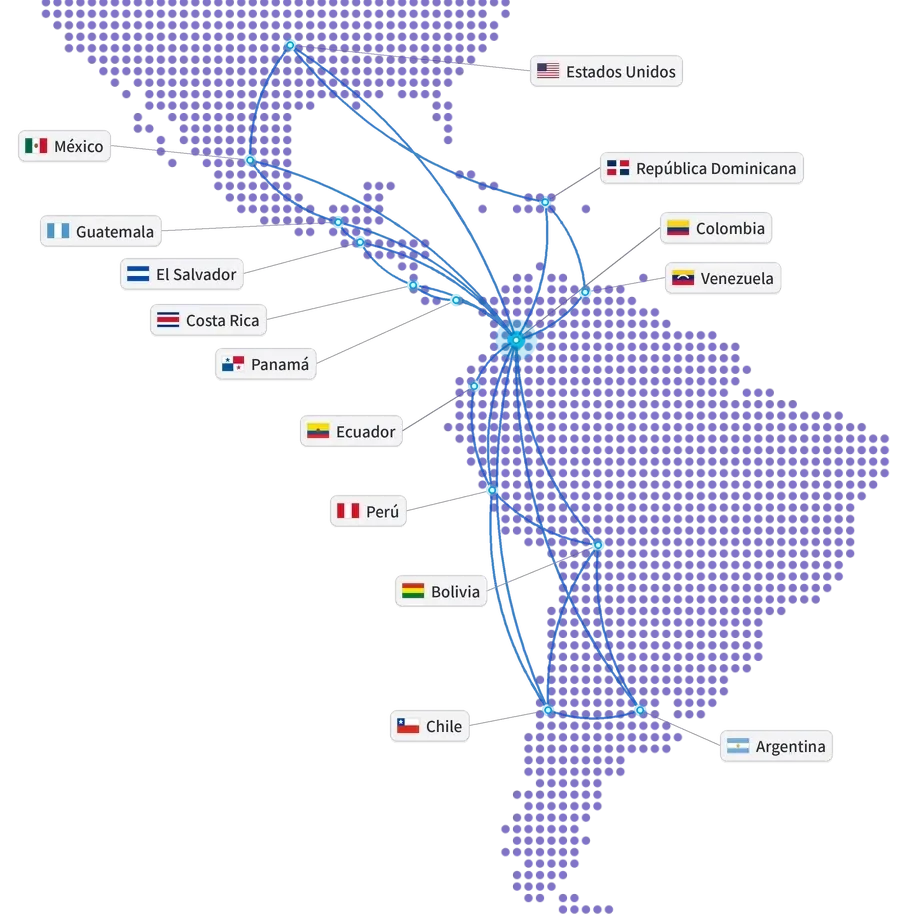
Global experience at your service
- Years of experience
- 15+
- Companies in Latin America
- 850+
- Countries
- 10+
- Integrations
- 100+
- ERP and ERP+ modules
- 40
- AI agents
- 20+
Companies that trust GIITIC






Questions about Smart Strategic Planning
What kind of plans does the artificial intelligence agent propose?
Does the agent make strategic decisions?
How reliable are the impact estimates?
Do I need GIITIC, or can I use my current systems?
How does it adapt to the way I plan?
Who controls what the agent does?
How long does implementation take, and how much does it cost?
What happens to the planning team?
 Next step
Ready to see your agent work in your process?
Let's talk about your operation. A consultant will review your process, your systems and your knowledge, and show you how the agent would work with your rules.
- Demo of the agent with cases from your process.
- Review of your systems and the available knowledge.
- Estimate of the scope and the next step.
Let's talk about your process
Fill in your details and a consultant will get in touch with you.
Registration successful
We'll be in touch with you shortly.